What Is a Lumbar Disc Herniation?
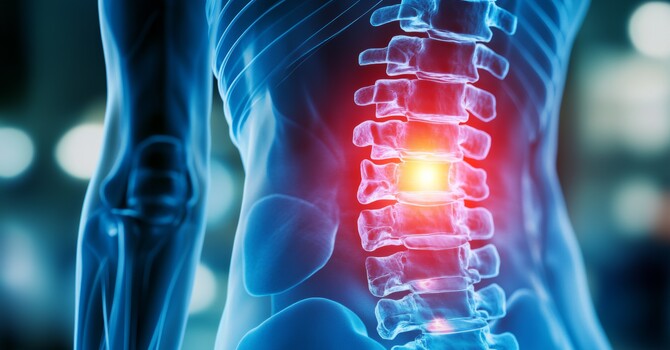
A lumbar disc herniation is a common and often painful spinal injury that can result from a trauma, especially car accidents. It occurs when one of the cushioning intervertebral discs between the vertebrae in your lower back ruptures or bulges outward, pressing on nearby spinal nerves.
The lumbar spine (lower back) consists of five vertebrae (L1–L5), each separated by a disc that acts as a shock absorber. These discs have a tough fibrous outer layer called the annulus fibrosus and a soft, gel-like center called the nucleus pulposus. During a collision, the sudden and violent forces placed on the spine can tear the outer layer, allowing the inner material to push out. This rupture is what we call a disc herniation known colloquially as a "slipped disc".
How Do Car Accidents Cause Lumbar Disc Herniations?
Even a low-speed crash generates significant compressive and shear forces on the spine. Here's how:
- Rear-end collisions rapidly thrust the torso forward and back, compressing the lumbar discs under extreme pressure.
- Front-impact crashes can force the spine into hyperflexion, straining disc walls.
- Side-impact or T-bone accidents twist the spine laterally, creating rotational stress that weakens disc integrity.
- Rollover accidents expose the spine to multi-directional forces capable of causing severe disc damage.
It's important to understand that disc herniations do not always cause immediate pain. In many auto injury cases, symptoms are delayed by hours, days, or even weeks — which is why medical and chiropractic evaluation immediately after an accident is critical, even if you feel "fine."
Signs and Symptoms of a Lumbar Disc Herniation
After a car accident, it's important to pay close attention to how your body feels in the hours and days that follow. A lumbar disc herniation often presents as low back pain that may be sharp, burning, or aching in quality. One of its most recognizable features is radiating leg pain, commonly known as sciatica. Individuals experiencing sciatica commonly report a pain that travels from the lower back down through the buttock, thigh, calf, and sometimes all the way into the foot. Many patients also report numbness or tingling along this same pathway, or notice muscle weakness in the leg that makes it difficult to stand on their toes or heels. Pain that worsens with sitting, bending forward, coughing, or sneezing is another hallmark sign, as these movements increase pressure on the herniated disc.
Note: If you experience loss of bladder or bowel control after a car accident, seek emergency care immediately. This may indicate a serious spinal emergency called cauda equina syndrome.
How Is a Lumbar Disc Herniation Diagnosed?
Diagnosis typically begins with a thorough physical and neurological examination. Your chiropractor or physician will evaluate your range of motion and posture, test reflex responses in your legs, assess sensory and motor function, and perform a series of orthopedic tests. Together, these findings help paint a clear picture of which disc level may be involved and how significantly the nerve is being affected.
When imaging is needed to confirm the diagnosis, several options are available. X-rays can reveal bone alignment and disc space narrowing, while MRI remains the gold standard for visualizing soft tissues. MRI can show where a disc herniation is located more accurately than most other tests, and it can often show whether it is compressing a nerve root. CT scans provide detailed views of bony structures and are used when MRI is unavailable. An EMG or nerve conduction study can measure the degree of nerve involvement when the clinical picture is unclear. Documenting your injuries as early as possible after the accident is important, both for your health, and for the integrity of any personal injury claim you may file.
Chiropractic Treatment for Lumbar Disc Herniation After a Car Accident
Chiropractic care is a highly effective first-line and non-surgical treatment approach for lumbar disc herniations caused by auto accidents. Rather than masking symptoms with medication, chiropractic addresses the root cause and can help to decrease swelling, inflammation, and joint biomechanics associated with disc injuries.
Chiropractic Techniques for Disc Herniations
Gentle, controlled chiropractic spinal adjustments also known as Chiropractic Maniulative Treatment (CMT)) helps restore proper joint motion of the vertebrae, reduce pressure on affected nerves, restore mobility, and create a better mechanical environment for disc healing. Techniques are always adapted to the severity of the injury.
Electrical stimulation (e-stim) is a therapeutic modality that delivers low-level electrical current to the injured area through small electrode pads placed on the skin. In the context of a lumbar disc herniation, e-stim serves several important functions: it interrupts pain signals traveling to the brain, reduces acute muscle spasm and guarding around the injured disc, decreases localized inflammation, and stimulates the release of endorphins, which are the body's natural pain-relieving compounds. It is a comfortable, non-invasive treatment that works especially well in the early stages of recovery when pain and muscle tension are at their highest, allowing the body to relax enough to respond to other forms of care.
Class IV laser therapy is an advanced and effective tool available for soft tissue and disc injuries. Using specific wavelengths of light energy, Class IV laser penetrates deep into spinal tissues (far deeper than older, lower-powered lasers) to trigger a process called photobiomodulation. At the cellular level, this stimulates mitochondrial activity, accelerates tissue repair, reduces pro-inflammatory cytokines, and promotes new blood vessel formation in the injured area. For patients with lumbar disc herniations, this translates to faster reduction of nerve inflammation, decreased pain, and a measurably shorter recovery timeline. Class IV laser is particularly valuable for treating the nerve irritation associated with sciatica and for reaching the deep paraspinal tissues that other surface-level modalities cannot access.
Complementing the above spinal approaches, soft tissue therapy including myofascial release, trigger point therapy, cupping, and instrument-assisted techniques addresses the muscle spasm, guarding, and inflammation that almost always accompany disc injuries. Releasing these tissues speeds recovery and helps restore normal movement patterns. Patients also receive therapeutic exercise and rehabilitation programming, including targeted core strengthening and stabilization work that protects the injured disc and builds the resilience needed to prevent reinjury. The McKenzie Method is frequently integrated for disc-specific care. Finally, postural correction and ergonomic guidance ensure that patients are not unknowingly aggravating the disc during daily activities.
The Importance of Early Treatment
Many accident victims make the mistake of waiting to seek care, assuming the pain will resolve on its own. Unfortunately, this approach carries real risks. Without proper treatment, inflamed and injured soft tissues can heal in a tightened state promoting muscle and tissue adhesions and laying down scar tissue that becomes a source of chronic pain and stiffness for years to come. An untreated partial disc tear can also worsen progressively with the normal demands of daily activity, turning a manageable injury into a more serious one. From a practical standpoint, a significant gap in treatment following an accident can be used by insurance companies to argue that your injuries were not severe or were unrelated to the collision, potentially undermining your personal injury claim. Perhaps most importantly, chronic pain is often preventable or greatly reduced in severity with early, consistent intervention. The sooner care begins, the better the long-term outcome.
How Long Does Recovery Take?
Recovery time varies depending on the severity of the herniation, the patient's age and overall health, and how quickly treatment is initiated. As a general guide, mild herniations managed with conservative chiropractic care often resolve within 4 to 12 weeks. Moderate herniations typically require a more comprehensive treatment plan spanning 3 to 6 months, while severe or multi-level herniations may take 6 to 12 months and may warrant a surgical consultation if neurological symptoms are not improving.
The good news is that the majority of lumbar disc herniations resolve without surgery especially when managed with consistent, evidence-based chiropractic and rehabilitative care. Early treatment, patient compliance, and a tailored rehabilitation program are the strongest predictors of a successful recovery.
Frequently Asked Questions
Can a car accident cause a disc herniation even at low speeds?
Yes. Research has shown that rear-end collisions as slow as 5–10 mph can generate enough force to injure spinal discs, particularly if the occupant is not braced for impact or the seat position is poor.
Will I need surgery for a lumbar disc herniation from a car accident?
Most patients do not require surgery. Studies suggest that 80–90% of lumbar disc herniations respond well to conservative treatment, including chiropractic care, physical therapy, and pain management. Surgery is typically considered only if conservative treatment fails after several months, or if there is progressive neurological decline.
Does chiropractic care help with sciatica from a disc herniation?
Yes. Chiropractic care is among the most effective conservative treatments for sciatica caused by lumbar disc herniations. Spinal adjustments reduce nerve pressure directly at the source, while adjunctive therapies like electrical stimulation and Class IV laser therapy address the nerve inflammation and muscle tension that drive sciatic pain.
How do I know if my back pain is a disc herniation or just a muscle strain?
Muscle strains typically cause localized pain that improves with rest and does not radiate down the leg. Disc herniations often produce radiating pain, numbness, tingling, or weakness extending into the buttock or leg. A chiropractor can perform an evaluation and order appropriate imaging to differentiate between the two.
Our Approach to Auto Injury Recovery
At Modern Care Chiropractic, we specialize in diagnosing and treating spinal injuries caused by car accidents. Every patient receives a comprehensive injury evaluation and a treatment plan tailored to their specific findings and clinical presentation. We coordinate with your attorney and medical team when needed, and our approach focuses exclusively on evidence-based therapies designed for lasting relief not just symptom management.
We also work with most auto insurance policies and can help you navigate the personal injury protection (PIP) process so you can stay focused on what matters most: healing!
Call us today to schedule your post-accident evaluation: (702) 900-2709
Located in North Las Vegas, NV - Accepting new auto injury patients
This blog post is intended for educational purposes and does not constitute medical advice. Please consult a licensed healthcare provider for evaluation and treatment of any injury.
Tags: lumbar disc herniation, car accident back pain, auto injury chiropractor, sciatica after car accident, chiropractic for disc herniation, back injury from car accident, herniated disc treatment without surgery, personal injury chiropractic