What Is Plantar Fasciitis?
Plantar fasciitis is a common cause of heel pain, affecting millions of Americans every year. The plantar fascia is a thick band of connective tissue that runs along the bottom of your foot, connecting your heel bone (calcaneus) to your toes, and it can become inflamed or even develop small micro-tears. This inflammation leads to sharp, stabbing pain that is often worse with the first few steps in the morning or after long periods of sitting or standing.
Despite how debilitating it can feel, plantar fasciitis is treatable.
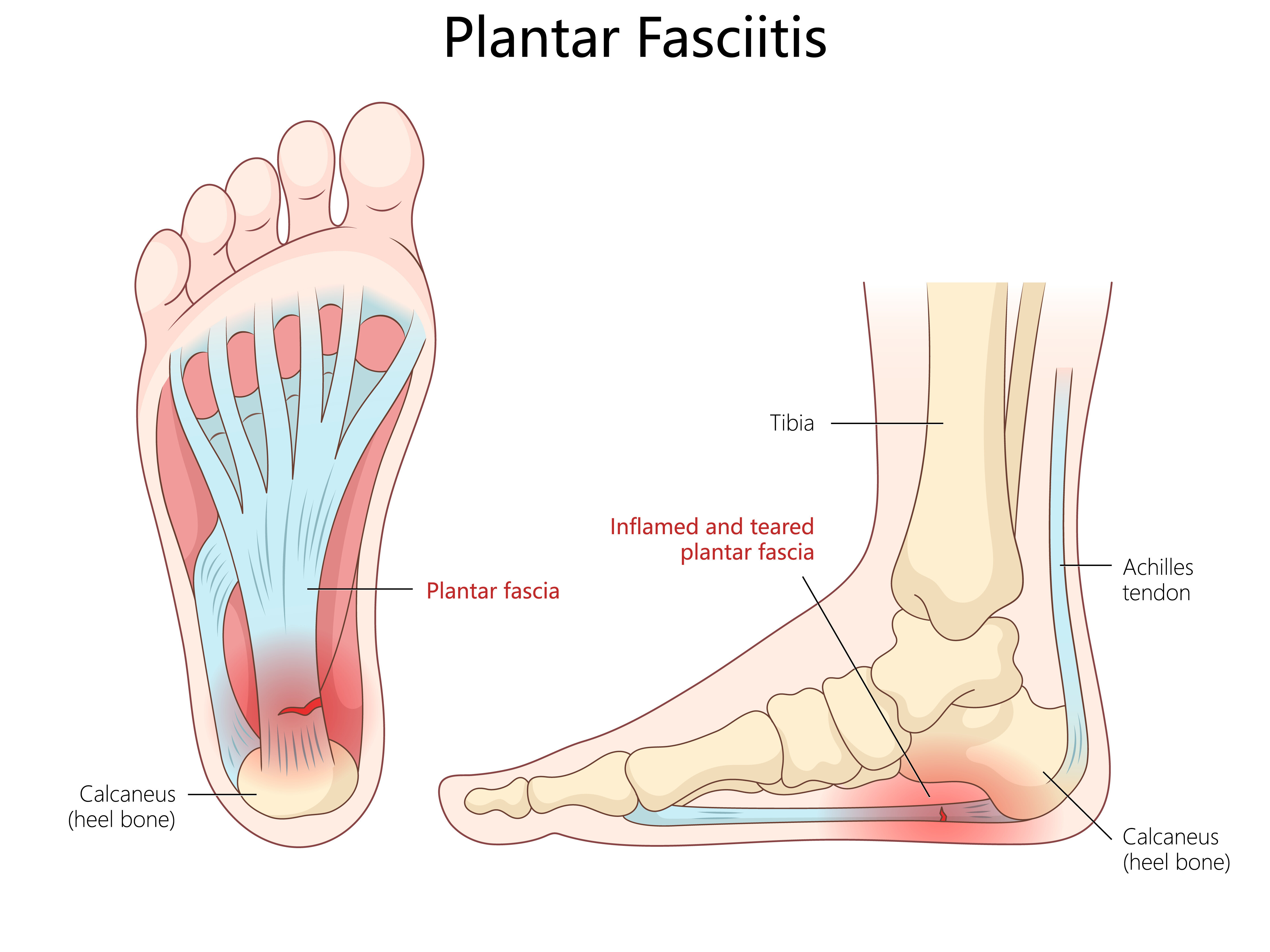
What Causes Plantar Fasciitis?
The plantar fascia acts as a shock absorber for your foot, supporting the arch every time you take a step. When the stress placed on that tissue exceeds what it can handle, damage and inflammation follow.Several factors are known to increase the risk:
Overuse or sudden increases in activity: Runners, hikers, and people who spend long hours on their feet are especially vulnerable.
Poor foot mechanics: Flat feet, high arches, or an abnormal walking pattern can distribute weight unevenly, putting excess strain on the fascia.
Improper footwear: Shoes that lack adequate arch support or cushioning.
Tight calf muscles or Achilles tendon: Restricted flexibility in the lower leg increases tension on the plantar fascia.
Excess body weight: Added weight increases the load placed on the foot with every step.
Age: Plantar fasciitis is most common between the ages of 40 and 60, as the fascia naturally loses some of its elasticity over time.
Recognizing the Symptoms
The hallmark symptom of plantar fasciitis is a sharp, stabbing pain at the bottom of the heel. Most people describe it as being most severe during those first steps out of bed in the morning. The pain often eases after a few minutes of walking as the tissue warms up, but it can return after long periods of activity or standing.
Some patients also experience aching or burning pain that extends along the arch of the foot, or stiffness that makes it difficult to flex the foot after rest. Left untreated, plantar fasciitis can become a chronic problem that affects your gait, which in turn can create secondary issues in the knees, hips, and lower back.
How Chiropractic Care Treats Plantar Fasciitis
Many people assume plantar fasciitis is purely a foot problem, but the reality is more complex. The way your body moves from your ankles and knees all the way up to your pelvis and spine directly influences the stress placed on your feet. This is where chiropractic care offers a distinct advantage over treatments that focus on the foot in isolation.
A chiropractor evaluates the entire kinetic chain to find contributing factors you might not have considered. Treatment for plantar fasciitis often includes a combination of the following approaches:
Foot and Ankle Adjustments Subtle misalignments in the bones of the foot and ankle can alter how your body distributes weight. Chiropractic adjustments to these joints help restore proper alignment and mechanics, reducing the repetitive stress that aggravates the plantar fascia.
Spinal and Pelvic Adjustments: In the pelvis or lower spine can cause compensatory changes in your gait that place added strain on the feet. By correcting these issues, chiropractic care addresses a root cause of the problem rather than just managing symptoms.
Soft Tissue Therapy Techniques such as myofascial release, Class IV laser therapy, therapeutic ultrasound, instrument-assisted soft tissue mobilization (IASTM), and therapeutic massage help break down scar tissue, reduce inflammation, and restore flexibility to the plantar fascia and surrounding structures.
Rehabilitative Stretching and Exercise Your chiropractor will guide you through targeted stretches for the plantar fascia, calf muscles, and Achilles tendon, all of which play a role in the condition. Strengthening exercises for the foot and ankle help prevent recurrence by building the support structures your arch depends on.
Orthotics and Footwear Guidance Custom or over-the-counter orthotics can provide meaningful support and off-loading for the plantar fascia. Your chiropractor can assess your gait and foot structure to recommend the most appropriate option.
What to Expect During Treatment
Healing from plantar fasciitis takes time, but most patients begin to notice meaningful improvement within a few weeks of consistent care. The timeline varies depending on how long the condition has been present, its severity, and how well patients follow through with at-home stretching and lifestyle modifications. During your first visit, your chiropractor will take a thorough health history, assess your posture and gait, and examine the foot, ankle, knee, and hip for any biomechanical contributing factors. From there, a personalized treatment plan is developed.
Can Plantar Fasciitis Be Prevented?
In many cases, yes. Once your symptoms have resolved, maintaining the habits that helped you heal is key to keeping the condition from returning. This means staying consistent with stretching, wearing supportive footwear, avoiding sudden spikes in physical activity, and checking in with your chiropractor when you notice early warning signs. People who are on their feet all day for work, athletes in high-impact sports, and anyone who has dealt with plantar fasciitis in the past are especially encouraged to be proactive about foot and ankle health.
When to Seek Care
If you've been dealing with heel pain that doesn't improve with rest, or if the pain is interfering with your daily life or activity, it's time to get an evaluation. Plantar fasciitis rarely resolves on its own when the underlying biomechanical issues aren't addressed, and the longer it goes untreated, the longer recovery typically takes.
At Modern Care Chiropractic we offer a non-invasive, drug-free approach to treating plantar fasciitis at its source. If you're ready to get back on your feet without pain, contact our office by booking an appointment online or give us a call or text at 702-900-2709 today to schedule a consultation.
This article is for informational purposes only and does not constitute medical advice. Please consult a qualified healthcare provider for diagnosis and treatment.