Side-Impact (T-Bone) Crashes and the Injuries They Cause
A rear-end crash pushes you forward and snaps your head back. A T-bone crash comes at you from the side, and the car has almost nothing to absorb it. The injuries are different, they land in different places, and some of them are the kind you want checked right away instead of waiting to see how you feel tomorrow.
Why side impacts are different
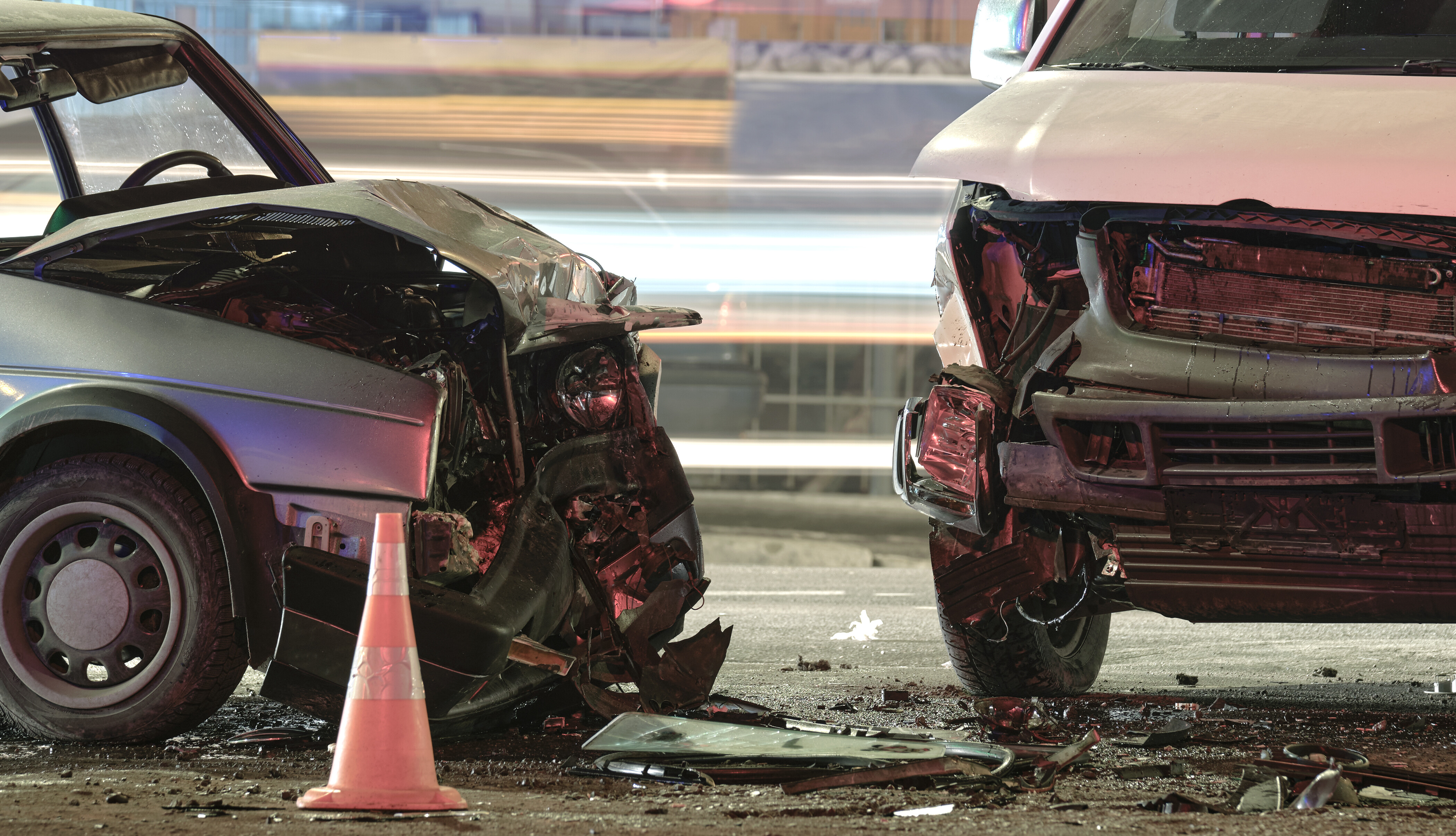
In a front or rear crash, there are several feet of hood or trunk between you and the other vehicle. That space crumples and soaks up energy. On the side of your car there is a door, a few inches of padding, and you. When another vehicle hits the door, the door gets pushed inward, and it reaches your shoulder, ribs, and hip before there is any chance to slow down.
Vehicle height makes it worse. A pickup or SUV that hits a smaller car often strikes above the sturdy part of the door frame, so the impact goes straight to the chest and head instead of the lower body. Side and curtain airbags help a lot when they deploy, but they only cover so much, and they can leave bruises and burns of their own.
Where you were sitting changes the injury
If your side of the car was hit, the injuries tend to come from direct contact: the door, the window, or the pillar beside you. If you were sitting on the opposite side, the injuries come from motion. The car gets shoved sideways, your body keeps going the way it was headed, and you slide toward the impact. People on the far side get thrown into the center console, the gearshift, or the person next to them, and their head and neck swing sideways against the seat belt.
That is why a passenger can be hurt as badly as the driver even though the car was struck on the other side. It's also why we ask exactly where you were sitting when we examine you.
The injuries we see most
The neck is usually involved. A side impact bends the head sideways and twists it at the same time, and that loads the small joints and ligaments in a different way than the forward-and-back motion of a rear-end crash. People often describe it as pain on one side of the neck that spreads into the shoulder and upper back, with a loss of range when turning to check a blind spot.
The chest and ribs take the direct force from the door. Bruised and cracked ribs are common, and they hurt with every breath, cough, or twist. The shoulder on the struck side can be bruised, sprained, or dislocated, and the collarbone can break. Tingling down the arm after a crash can come from the neck or from nerves around the shoulder, which is covered in our post on thoracic outlet syndrome.
The pelvis and hip are often overlooked. A side impact can fracture the pelvis in serious crashes, and in milder ones it bruises the bone on the outside of the hip. That bruising can set up the kind of lingering outer hip pain we describe in our post on hip bursitis. The sacroiliac joint, where the spine meets the pelvis, can also be sprained, which shows up as pain low on one side of the back or in the buttock.
The head is at risk whenever it hits the window or pillar, or whips sideways hard enough to cause a concussion even without a blow. Our post on concussions after a car accident covers the signs.
Why symptoms show up late, or in odd places
Adrenaline spikes a lot after a crash and may hide some of your immediate discomfort. Neck stiffness often arrives the next morning, and rib and hip pain can take a couple of days to build as the bruising develops. Pain on only one side of the body is typical after a side impact, and people sometimes dismiss it because it doesn't match the textbook picture they have of whiplash.
Pay attention to anything that is new after the crash, even if it seems unrelated: jaw soreness, headaches at the base of the skull, dizziness when you turn your head, tingling in your fingers, foot or leg pain, or pain that wakes you at night. Those are all things we ask about.
What to tell your providers
Specifics help more than a general account. Tell each provider which side of the car was hit, where you were sitting, whether your head struck the window or pillar, whether the side airbags went off, whether you were wearing a belt, and how far the door was pushed in. A door that was pushed several inches into the cabin tells us something very different from a dented panel. If you took photos of the vehicle, bring them.
It's also worth mentioning old injuries. Your doctor needs to know what was there before so they can measure what changed.
What care looks like
The first visit is an exam. We check how your neck moves in every direction, including side-bending and rotation, and we look at the ribs, thoracic spine, shoulders, pelvis, and hips. We test strength, reflexes, and sensation. When needed we will refer you out for imaging, before we do any hands-on treatment. We don't adjust areas where a fracture is possible.
Once serious injury is ruled out, care usually combines gentle joint mobilization or adjustments where they're appropriate, soft tissue work for the muscle spasm that builds around injured areas, and a progression of movement and strengthening exercises. Class IV laser therapy can also be added to help with pain and to improve soft tissue healing.
We will also coordinate with your medical doctor and with a pain management doctor if you have one, so your treatment plan fits together. We also work directly with personal injury attorneys and accept liens, which means a pending claim doesn't have to delay your care.
How long recovery takes
Recovery depends on what was injured, and a side-impact crash often hurts more than one thing at once, so each part heals at its own pace. Bruised ribs and strained muscles can take weeks to months, and fractures may take longer. Neck and back joint injuries often take a few months. Progress is rarely smooth, so expect good days and bad ones, and a flare after a long drive or lifting something is common. If you're still limited after several weeks, or you're getting worse instead of better, tell us so we can re-check the area and decide whether you need imaging or a referral.
Care after a T-bone crash in North Las Vegas
Modern Care Chiropractic is in the Hidden Canyon neighborhood of North Las Vegas, at 3925 N. Martin Luther King Blvd., Suite 120. If you were in a side-impact crash, whether you feel hurt or just off, call (702) 900-2709 or schedule an appointment online. Our page on auto injury chiropractic care explains how we handle accident cases.
This article is for general information and is not a substitute for medical advice, diagnosis, or treatment. If you are having a medical emergency, call 911.