Airbags save lives but they can also cause serious injuries.
If you were in a car accident and your airbag deployed, you may have walked away feeling "okay" only to wake up the next day with neck pain, back stiffness, chest soreness, or headaches. These are classic signs of airbag-related injuries, and they're more common than most people realize.
At Modern Care Chiropractic, we work with car accident patients throughout the Las Vegas area to identify, treat, and rehabilitate injuries caused by airbag deployment. Here's everything you need to know.
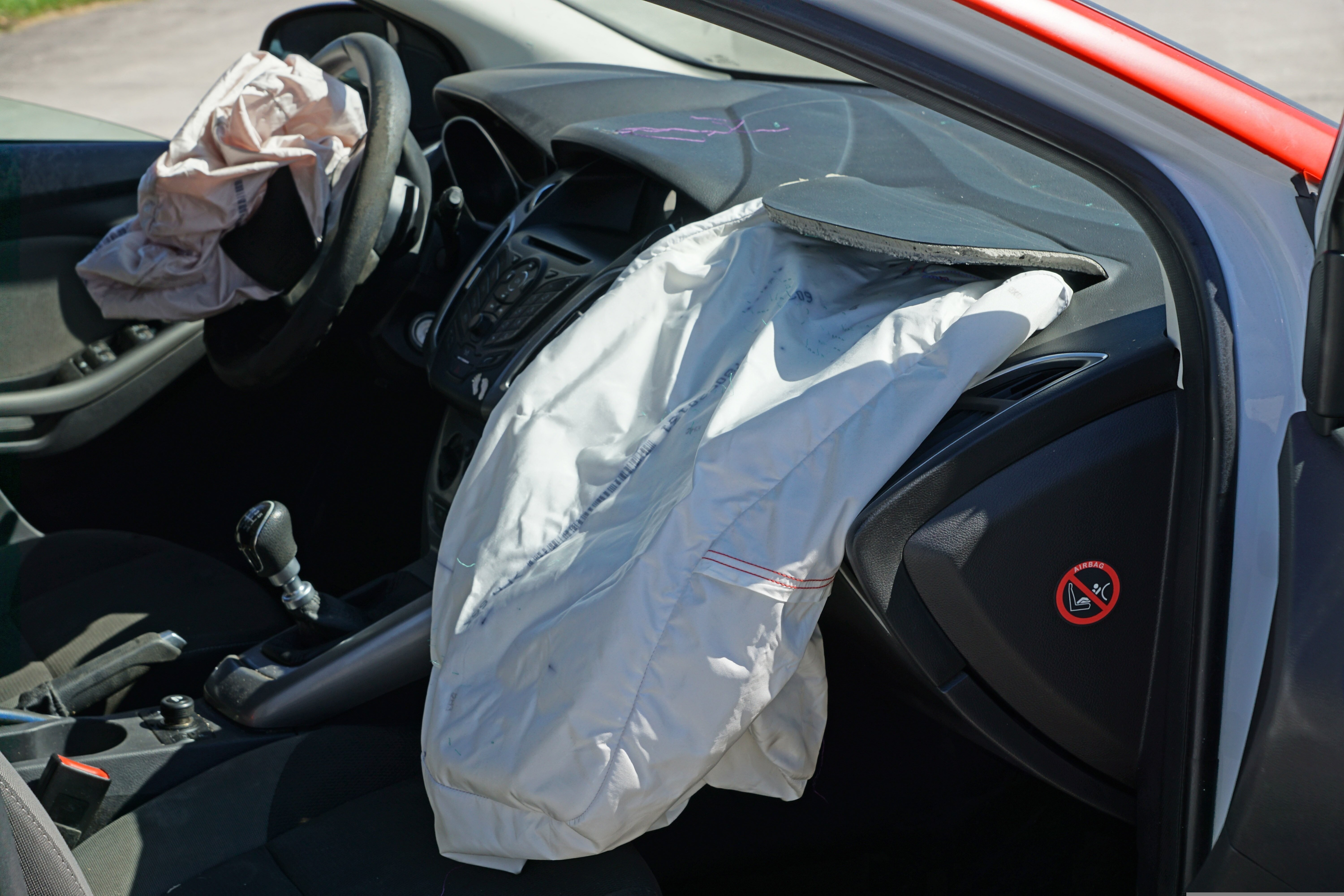
What Happens When an Airbag Deploys?
When an airbag deploys, your body often experiences sudden deceleration of the head and neck, forward and backward whipping motion (whiplash), blunt impact force to the face, chest, and arms, chemical irritants such as sodium azide gas, and heat and friction from the bag's surface.
Airbags deploy in milliseconds(ms), typically within 30–50 ms of impact, and they deploy at high speeds of up to 200 mph. While this cushioning force prevents your head from striking the steering wheel or dashboard, the explosive inflation creates its own set of physical forces on your body.
Even at low speeds, these forces can strain ligaments, compress spinal discs, and inflame soft tissue throughout the neck, upper back, and chest.
Common Airbag Injuries Treated by Chiropractors
1. Whiplash and Cervical Spine Injuries
Whiplash is the most frequent injury associated with airbag deployment. The rapid back-and-forth motion of the head strains the muscles, tendons, and ligaments of the cervical spine (neck). Symptoms often don't appear until 24–72 hours after the accident. Whiplash symptoms include neck pain and stiffness, headaches starting at the base of the skull, shoulder and upper back pain, dizziness, blurred vision, and difficulty concentrating ("brain fog"). To learn more about whiplash you can read our blog on the topic here
2. Thoracic Spine and Rib Injuries
The airbag impacts your chest directly, which can bruise or fracture ribs and create joint dysfunction in the thoracic (mid-back) vertebrae. This leads to sharp pain when breathing deeply, tenderness to the touch, and reduced range of motion in the torso.
3. Shoulder and Rotator Cuff Strains
The arms are often extended toward the steering wheel at impact. Combined with the airbag's force, this can cause shoulder sprains, rotator cuff tears, and AC joint injuries.
4. Facial and Jaw Injuries (TMJ)
The impact of the airbag on the face can displace the jaw joint (temporomandibular joint), leading to TMJ dysfunction which includes pain when chewing, jaw clicking, facial soreness, and even ear pain. Learn more about TMJ dysfunction here.
5. Chemical Burns and Eye Irritation
The propellant chemicals released during airbag deployment can cause skin irritation, chemical burns, and eye inflammation. While these are typically addressed by emergency medicine, the inflammatory response can affect surrounding musculature and require soft tissue care.
6. Concussions and mTBI
When an airbag deploys, the impact of the rapidly inflating airbag on the head can cause the brain to shift inside the skull, sometimes resulting in a concussion. A concussion is a form of mild traumatic brain injury (mTBI). Symptoms of a concussion include headaches, confusion, nausea, vomiting, sensitivity to light and noise, sleep disturbances, mood changes, irritability, anxiety, memory problems or difficulty concentrating. It’s important to be evaluated early with neurological monitoring in order to significantly reduce the duration and severity of post-concussion symptoms.
Why Airbag Injuries Are Often Underdiagnosed
One of the biggest challenges with airbag injuries is that symptoms are frequently delayed. Adrenaline released during and after a crash masks pain signals. Many patients leave the emergency room feeling okay, only to develop significant pain, stiffness, and neurological symptoms in the days that follow.
Additionally, soft tissue injuries like sprains, strains, and disc bulges often don't appear on standard X-rays. This means patients are told "nothing is broken" and sent home without a treatment plan. Without proper care, these injuries can become chronic, leading to long-term pain, reduced mobility, and diminished quality of life.
Don't wait for the pain to get worse. If your airbag deployed, it's important to seek an evaluation within 72 hours, even if you feel fine right now.
How Chiropractic Care Treats Airbag Injuries
Chiropractic care is uniquely well-suited for the types of injuries airbag deployment causes. Unlike pain medications that only mask symptoms, chiropractic treatment addresses the root cause of your pain, the underlying joint dysfunction, soft tissue damage, and nervous system interference.
At Modern Care Chiropractic, your first visit begins with a thorough evaluation that includes:
- Full health history and accident documentation
- Postural and orthopedic assessment
- Range-of-motion testing
- Spinal and neurological examination
- Referral for Imaging such as X-ray or MRI.
This process allows us to establish an accurate picture of your injuries before we ever begin treatment.
Spinal Manipulation and Soft Tissue Therapies:
Chiropractic adjustments help restore normal biomechanics and movement to spinal joints that have been compressed, locked, or are not functioning properly due to the force of impact. By gently mobilizing these joints, we reduce nerve irritation, decrease inflammation, and allow the body to heal properly. Chiropractic spinal adjustments are gentle, targeted, and tailored to your specific injuries which is especially important in acute post-accident cases where inflammation and sensitivity are high.
Airbag injuries also often involve significant soft tissue, muscle, and ligament damage. Our soft tissue treatments include:
Electric Stimulation provides gentle electrical currents to injured tissues to reduce pain, decrease inflammation, and stimulate muscle function.
Myofascial release which breaks up scar tissue and adhesions in injured muscles.
Class IV Laser Therapy stimulates cellular energy production (ATP), accelerates tissue repair, and reduces the inflammation.
Trigger point therapy addresses painful muscle knots that refer pain to other areas.
Instrument-assisted soft tissue mobilization breaks up muscle adhesions and promotes healing in chronically injured tissue.
Cupping reduces muscle spasm and improves circulation to healing tissue.
Rehabilitative Exercise for once acute pain begins to resolve, we introduce targeted stretching and strengthening exercises to restore full function, prevent re-injury, and rebuild the muscular support around your spine and joints.
Frequently Asked Questions About Airbag Injuries and Chiropractic
Q: Can I see a chiropractor right after a car accident? Yes and early chiropractic evaluation helps document your injuries, begin treatment before scar tissue forms, and establish a clinical record that supports any insurance or legal claims.
Q: Will my car insurance cover chiropractic care after an accident? In most cases, yes. Personal Injury Protection (PIP) and Medical Payments (MedPay) coverage typically includes chiropractic care after a motor vehicle accident. Our team can help verify your benefits and work directly with your insurance or attorney.
Q: I didn't feel pain right after the accident. Do I still need to be evaluated? Absolutely. Delayed onset of symptoms is extremely common with airbag injuries. Seeking care within 72 hours, even before symptoms appear, allows us to identify and begin treating injuries before they become chronic.
Q: Is chiropractic care safe after a car accident? Yes. Chiropractic adjustments are modified for post-accident patients. We use gentle, low-force techniques as appropriate for your specific condition, and we never begin adjustments without a thorough examination first.
Don't Let an Airbag Injury Become a Chronic Problem!
Millions of Americans are involved in car accidents each year, and a significant portion sustain airbag-related injuries that go undetected and untreated. Left unaddressed, these injuries can progress to chronic problems such as chronic neck or back pain, recurrent headaches, herniated discs, reduced range of motion, or degenerative joint changes. Early, targeted chiropractic care is the most effective way to prevent acute airbag injuries from becoming long-term conditions.
If you or a loved one was in a car accident, even a minor one, don't wait to be seen. Our experienced team at Modern Care Chiropractic specializes in motor vehicle accident injuries and will work with you to develop a personalized recovery plan. Call our office today at 702-900-2709 or book an appointment online.
This blog post is intended for informational purposes only and does not constitute medical advice. If you have been injured in a car accident, please seek evaluation from a licensed healthcare provider.